

Ever found the perfect fade haircut online, only to leave the barbershop with something completely different? That’s because knowing what a mid fade looks like isn’t the same as knowing how to ask for it. We’ve all seen someone walk out of the barbershop with a fade that looked nothing like the picture they showed. Usually, the problem wasn’t the barber. It was the lack of a shared language.
This guide pairs each fade style with the clipper guard numbers barbers use to build it, the real history behind the cut, and what it costs and how often you’ll need a touch-up. You’ll leave knowing what to ask for, not just what to screenshot.
What Is a Fade Haircut?
A fade haircut is a men’s style where the hair shortens gradually down to the skin or near-skin at the sides and back, using a sequence of clipper guards that step down in size, while the top stays longer for styling.
The height where the fade starts- low, mid, or high- changes how dramatic the contrast looks.
Where the Fade Actually Comes From

The fade started as a military regulation cut in the 1940s and 1950s, when short, uniform sides were a practical answer to strict grooming standards. Soldiers carried the style home after service, and after that it spread into civilian barbershops through the following decades.
The fade haircut most guys know today began to take shape in the 1980s, when Black barbers transformed the traditional military taper into a cleaner, more stylish look, according to EBONY. The new style became known as the high-top fade and was made famous by hip-hop artists like Big Daddy Kane and Eric B & Rakim. Over time, the fade evolved into one of the most popular haircuts, now requested in barbershops around the world.
Fade Height, Explained by the Clipper Guards Barbers Actually Use

Every fade is a blend between clipper guard sizes, not a single length. According to Wahl’s official guide to clipper guards, a 1/2 guard leaves close to skin, a number 1 leaves about 1/8 inch, and the blend climbs from there toward a number 3 or 4 at the point where the fade meets the longer top.
Where that blend starts on your head is what separates a low fade from a high one.
Fade haircut heights: where the blend starts and the typical clipper guard range
| Fade Height | Blend Starts | Typical Guard Range |
|---|---|---|
| Skin / Bald Fade | At the hairline | 0 / 0.5 up to 2-3 |
| Low Fade | Just above the ears | 1 up to 3-4 |
| Mid Fade | At the temple | 1-2 up to 4 |
| High Fade | Near the crown | 0.5 up to 4-5 |
12 Fade Styles for Guys, and Who Each One Fits
These fade hairstyles for guys cover the full range from conservative to dramatic, so read through for the height and texture combination that matches your hair and your daily routine.
1.Skin Fade

The most dramatic version, tapering all the way to bare skin before blending into the top. Shows off a clean hairline; works well with a strong jaw or curly, thick hair on top.
2.Low Fade

Blend starts just above the ears. Conservative enough for formal workplaces, easiest fade to grow out without an awkward stage.
3.Mid Fade
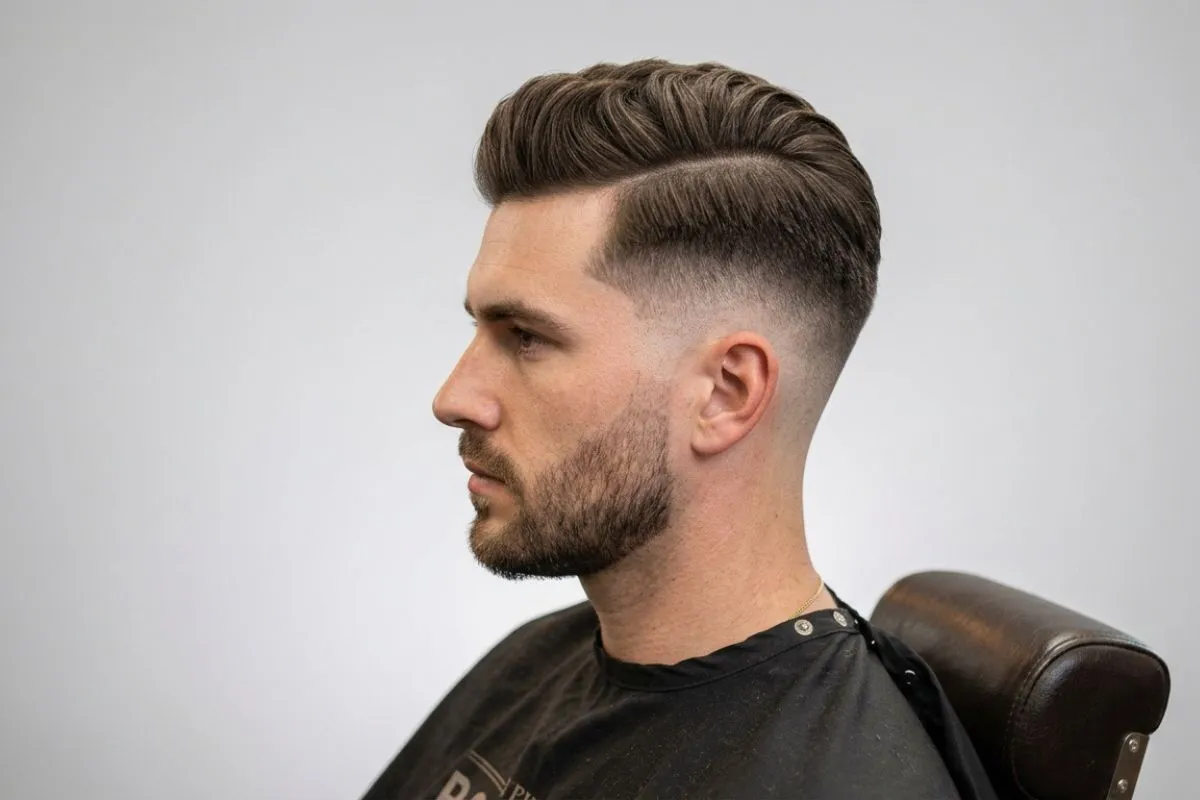
Starts at the temple. The most versatile height, pairing with a pompadour, side part, or textured crop, and the default recommendation for first-timers.
4.High Fade

Blend climbs close to the crown for the sharpest contrast on the list. Needs the most frequent trims since regrowth shows fastest here.
5.Taper Fade

Never goes down to skin, leaving more length at the sides. Reads as conservative and grows out with little visible demarcation.
6.Drop Fade

Blend line curves downward behind the ear, following the shape of the skull. Especially sharp on curly or wavy top hair.
7.Burst Fade

Curves in a half-circle around the ear rather than a straight band. Works well with a mohawk, faux hawk, or center-concentrated length.
8.Temple Fade

Also called a Brooklyn fade. Blending stays concentrated around the temples, a subtler entry point than a mid or high fade.
9.Shadow Fade

Stops short of bare scalp, leaving a soft haze of hair at the shortest point. The shape of a fade without stark contrast.
10.Fade With Line Up
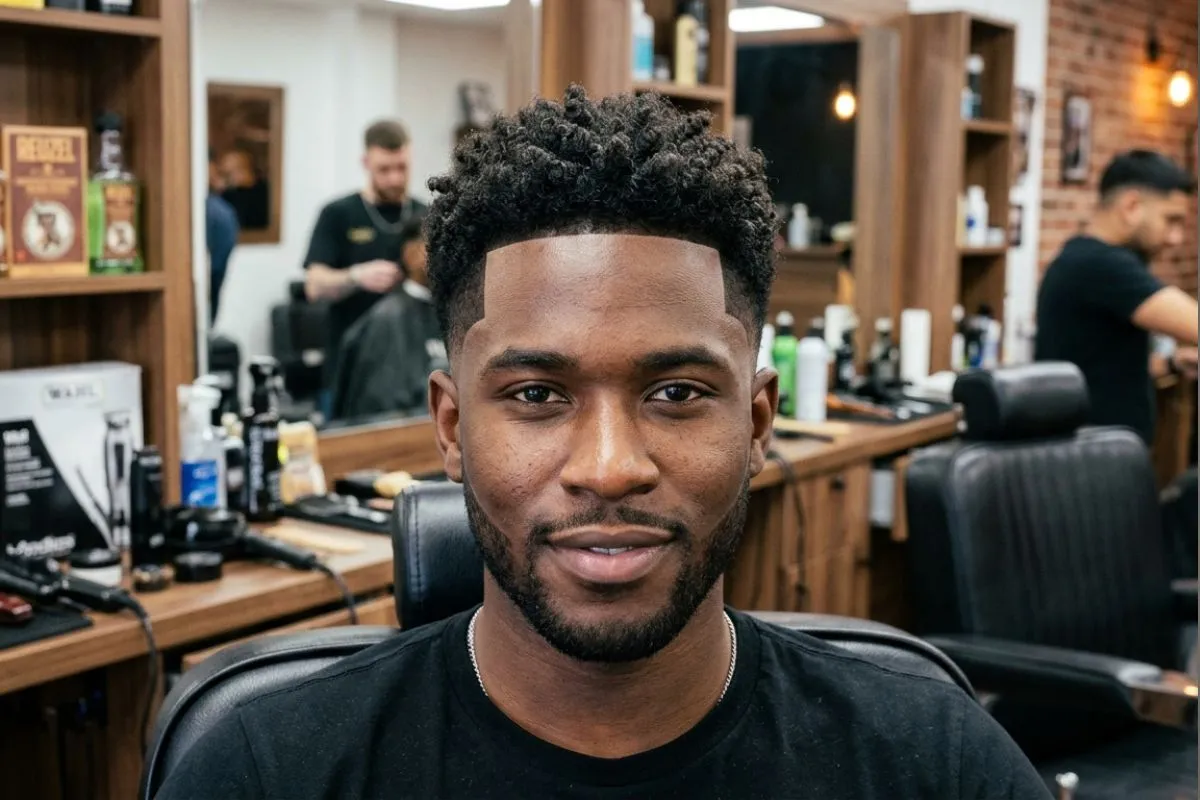
A razor-sharp hairline complements the fade below, common with curly and coily textures. Needs barber visits every one to two weeks.
11.Fade With Pompadour

A mid or low fade paired with volume and height on top, usually held with a strong pomade.
12.Fade With Curly Top

A low or mid fade at the sides leaves natural curls untouched on top. Barbers often cut curly tops dry to preserve the pattern.
Matching a Fade to Your Face Shape and Hair Type
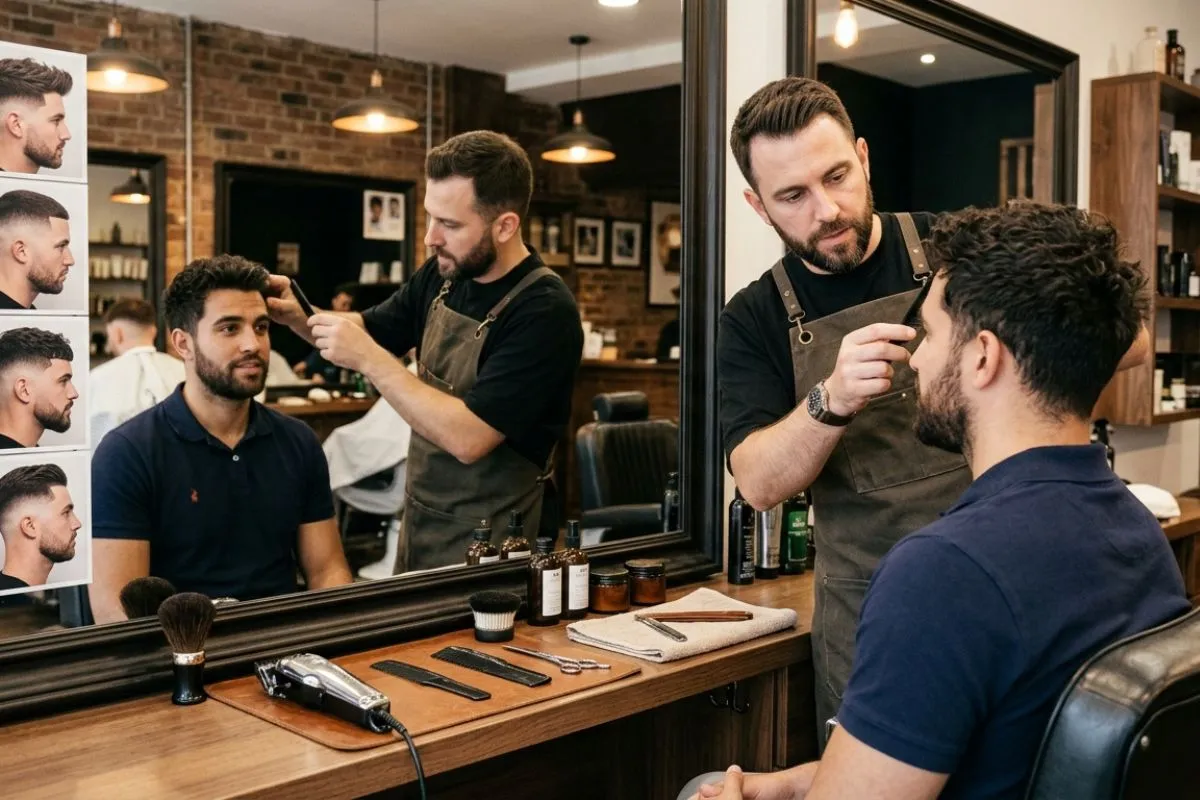
Not every fade works for every face. Your face shape and hair type play a big role in which style actually flatters you.
A high fade adds visual height, which flatters round faces by making them look longer.
A low or mid fade suits square and diamond faces better, since it doesn’t add extra width at the sides.
Straight hair gives a clean, sharp blend line more easily than curly hair, which tends to look best with a drop or burst fade where the curve of the line works with the hair’s natural movement instead of against it.
Thick hair can go with a high fade without looking bulky on top, while fine or thinning hair often looks fuller with a shorter, low-maintenance option like a taper fade.
What a Fade Costs and How Often You’ll Need One
A standard barbershop fade costs about the same as any other men’s haircut, with local barbershops charging in the 20-45$ range and chain barbershops running slightly higher, according to Yelp’s cost guide.
Maintenance depends entirely on height. Skin and high fades need a trim every two to three weeks before the line grows out and blurs. Low and mid fades stretch to three or four weeks, and taper fades can go five to six weeks without losing their shape.
That maintenance gap is worth weighing before you commit to a height, since the sharpest look on this list is also the one that puts you back in the chair the most.
How often to trim each type of fade
| Fade Type | Trim Frequency |
|---|---|
| Skin / High Fade | Every 2-3 weeks |
| Low / Mid Fade | Every 3-4 weeks |
| Taper Fade | Every 5-6 weeks |
How to Ask Your Barber for the Right Fade

- Tell your barber the height you want first; low, mid, or high, since that’s the detail that changes the whole look
- Then describe the top: length, texture, and whether you want it styled with a part, pushed back, or left natural
- Bring one or two reference photos so your barber can match the exact blend line
If you’re not sure what you want, ask for a mid fade to start. It’s the easiest to adjust higher or lower on your next visit once you’ve seen how it grows out. The same “start conservative, adjust later” logic applies to most style choices worth committing to, it’s the same principle behind dressing for a look that photographs well without feeling like a costume.
Final Thoughts
A fade is really just a conversation between you and your barber, told in clipper guard numbers instead of words. Once you know that a mid fade starts at the temple and a taper never touches skin, you stop hoping a screenshot gets the message across and start asking for exactly what you want. The style itself doesn’t need to be complicated. The vocabulary just needs to be right.
Frequently Asked Questions
Q1.What is the most low-maintenance fade haircut?
A taper fade is the lowest-maintenance option because it never goes down to skin, so regrowth is far less noticeable between barber visits, and it can stretch to five or six weeks before it needs a trim.
Q2.How long does a fade haircut last before it needs a trim?
Skin and high fades need a trim every two to three weeks. Low and mid fades stretch to three or four weeks, and taper fades can go five to six weeks.
Q3.What’s the difference between a fade and a taper?
A fade blends the hair all the way down to skin or near-skin using a sequence of clipper guards, while a taper keeps more length throughout and never reaches bare skin, giving it a softer, more conservative look.
Q4.Which fade works best for curly hair?
Drop fades and burst fades tend to work best for curly hair because their curved blend lines follow the hair’s natural movement instead of cutting against it, and many barbers recommend cutting curly tops dry to preserve the curl pattern.
Q5.Do I need to describe clipper guard numbers to my barber?
No. Most guys describe the height they want, low, mid, or high, and their barber selects the actual guard sequence. Knowing the general system helps you understand what you’re asking for, but the exact blend is the barber’s call.