

The smart home devices worth buying in 2026 aren’t simply cheaper versions of what existed in 2023. Matter 1.5 pulled cameras into a standard that used to leave them out.
A real wave of sub-fifty-dollar devices followed within months, and a government security label is finally catching up to the risk. Buy the hub first, add eyes and outlets next, and check for the Matter logo and a published update policy before anything else.
How do you know which smart home devices are genuinely worth buying in 2026 and which are just old recommendations with new price tags?
Smart home technology has changed in 2026. Matter now supports security cameras, making it easier for devices from different brands to work together.
On top of that, Blink, IKEA, and Philips have released several budget-friendly smart home devices priced under $50.
Below are the devices worth buying right now, what Matter 1.5 actually unlocks, and a new government label to look for before you buy anything with a microphone or a lens.
What is the best smart home device to start with in 2026?

Start with a voice hub that also works as the central hub for your smart home.
The Amazon Echo Dot 5th generation or a Google Nest Hub both work.
They cost under 50$, control Zigbee and Matter devices without extra hardware, and let you add locks, plugs, and sensors later without rebuilding your setup from scratch.
Why Are Experts Rethinking Smart Home Devices in 2026?
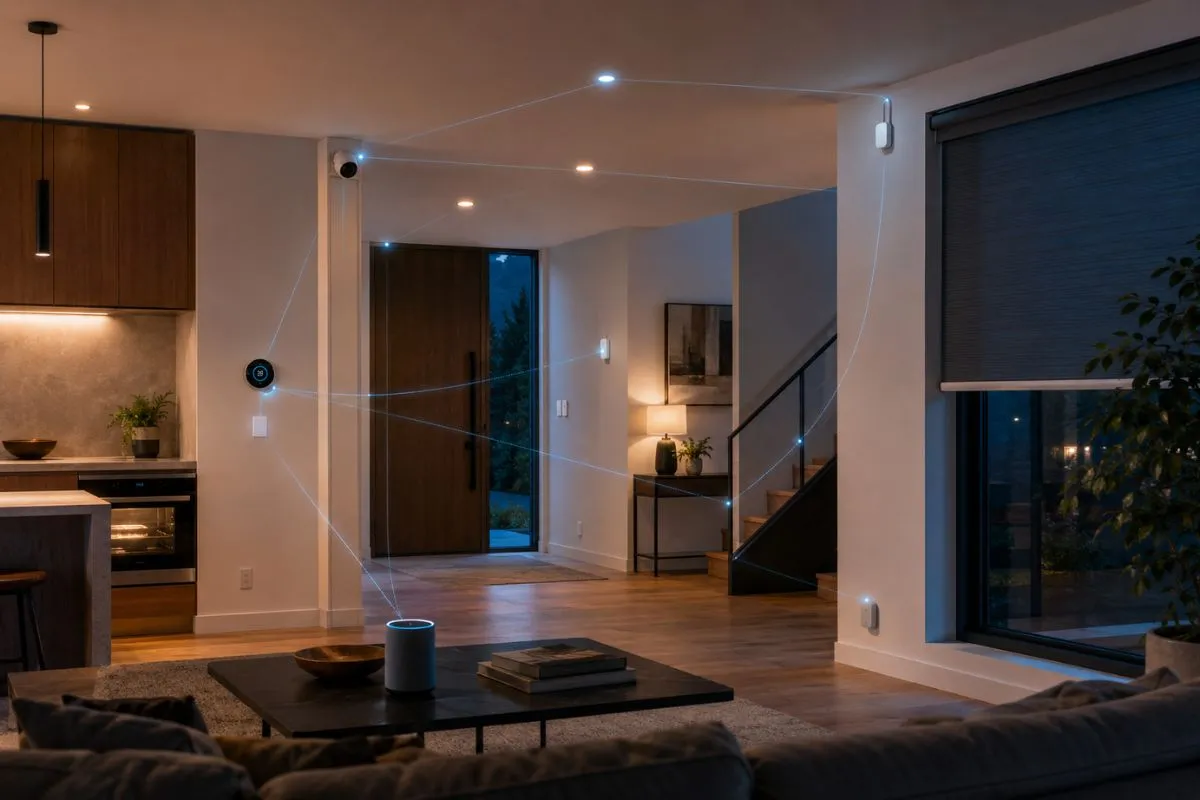
For years, building a smart home often meant sticking with one brand.This shift reflects a broader technology trend where companies are no longer competing only through hardware. The strongest technology businesses increasingly build connected ecosystems where devices, software, and services work together to create long-term customer loyalty, a strategy also seen in Tesla’s business model.
Alexa devices didn’t always work well with Apple accessories, and Google Home wasn’t much better with products outside its own ecosystem.
Matter was created to solve that problem. A Matter update is a new version of the system that makes more smart home devices work together or improves existing features.
At first, though, it only solved part of it.
Early versions of Matter made it easier to connect smart lights, plugs, and sensors, but support for cameras and smart locks was still missing.
That changed in November 2025. The Connectivity Standards Alliance released Matter 1.5, adding native support for security cameras through WebRTC, along with new device categories such as closures and soil sensors.
The impact didn’t take long to appear.
Within months, several brands released more affordable Matter-compatible products.
Blink launched its first hardwired 2K video doorbell for $49 in May 2026.
IKEA rebuilt its smart lighting and sensor lineup around Matter.
Philips introduced a new bridge-free range called Philips Smart Lighting, separate from the Hue ecosystem.
Those launches weren’t just marketing announcements.
They gave buyers more practical options at lower prices. A hardwired 2K video doorbell for $49 wasn’t available just 18 months earlier. IKEA also replaced the coin-cell batteries in many of its sensors with rechargeable AAA batteries, reducing the need for frequent battery changes.
Build your smart home devices in this order
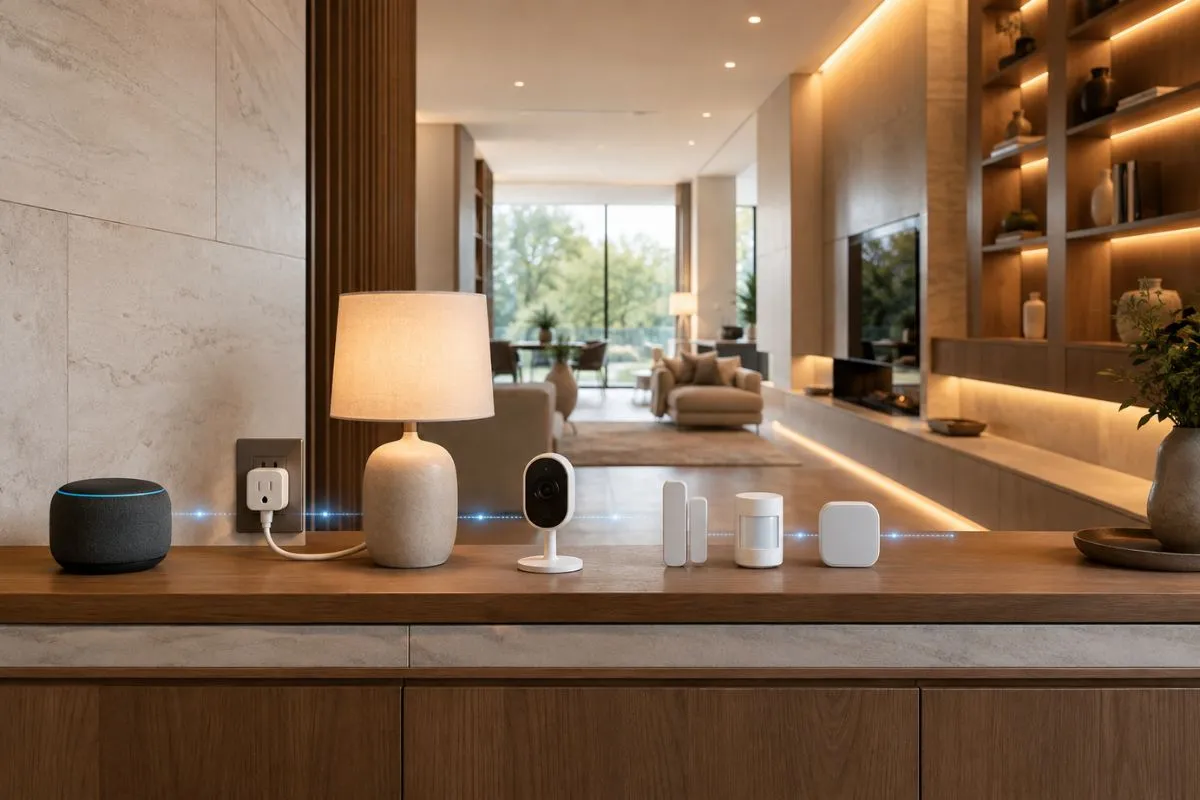
At first, every new gadget feels like an upgrade. Then the frustration begins. You’re switching between apps, wondering why devices won’t work together, and buying extra hubs just to make everything compatible.
Instead of making life simpler, your smart home becomes harder to manage. Build around function instead. Each purchase makes the next one easier.
Start with the brain: a voice hub
The Echo Dot 5th generation costs 49$, includes a Matter controller and a temperature sensor, and doubles as a Zigbee hub once you add compatible devices later.
It’s the single device most likely to make the rest of your setup actually talk to each other.
Add eyes at the door next

Blink’s Wired Doorbell 2K Plus, at 49$, delivers a 1920 x 1920 head-to-toe view and works with a Sync Module for local storage if you’d rather skip a monthly subscription.
Want a camera for the yard or the nursery instead?
The Wyze Cam v4, around 36$, records in 2.5K locally to a microSD card with no mandatory cloud plan.
Make the outlets smart after that

TP-Link’s Kasa Mini EP25 four-pack, about 43$, turns any lamp or fan into something you can schedule or voice-control across Alexa, Google, and Apple Home, no hub required.
Wire in the senses with contact and motion sensors

Aqara’s Door and Window Sensor P2, 30$ and up, pairs directly to a HomePod mini or a newer Echo over Matter-over-Thread, no separate hub needed, and it’s the cheapest way to trigger a light or lock the moment a door opens.
Finish with light

Govee’s RGBIC strips, from about 13$, undercut Hue on colour accuracy per dollar. IKEA’s new Matter bulbs start around 7$. Both are controllable from whichever hub anchors your setup.
Smart Home Device Buying Guide 2026
Smart home devices worth buying: best first choice and why
| Device | Best First Choice | Why Buy It |
|---|---|---|
| Smart Hub | Amazon Echo Dot / Google Nest Hub | Controls your ecosystem |
| Security Camera | Blink Doorbell / Wyze Cam | Home monitoring |
| Smart Plug | TP-Link Kasa | Makes existing devices smart |
| Sensors | Aqara Door Sensor | Automation triggers |
| Smart Lights | IKEA Matter Bulbs | Easy home upgrades |
What Matter 1.5 actually means for your next purchase
Matter isn’t a brand you buy. It’s a label to look for on the box.
A Matter-certified device works with Alexa, Google Home, Apple Home, and Samsung SmartThings at the same time, so a plug you buy this year won’t get stranded if you switch ecosystems next year. This type of ecosystem flexibility is becoming increasingly important as companies like Apple continue expanding their connected device strategy.
Look for Matter over Thread specifically where you can.
Thread devices route commands directly to one another over a low-power mesh network instead of bouncing through a cloud server. That’s why a Thread sensor tends to respond faster than a Wi-Fi one.
Zigbee and Z-Wave, both older than Matter by two decades, aren’t going anywhere. They still handle sensors and switches more reliably than Wi-Fi in a crowded house, and most current hubs bridge them into a Matter setup anyway.
The security label to check before you buy

Every one of these devices connects to your home network, which means every one of them is a target.
The Federal Communications Commission’s U.S. Cyber Trust Mark is meant to make that risk visible at the point of purchase. It’s a label backed by a QR code linking to plain-language security information, including how long the manufacturer commits to sending security updates.
The program isn’t fully live yet. The FCC named the ioXt Alliance as its new lead administrator in April 2026 after the previous administrator withdrew, and applications for manufacturers to certify devices are still being processed. So what’s the workaround until certified products carry the mark?
Check whether a manufacturer publishes its own update policy and follows the device security baseline the National Institute of Standards and Technology laid out in NISTIR 8259. If a product page won’t tell you how long it gets security patches, that’s the answer right there.
Frequently asked questions
Q1:Do I need a hub for smart home devices in 2026?
Not always. Many devices connect straight to Wi-Fi and their own app. A hub becomes worth it once you own more than four or five smart home devices and want them to trigger each other, like a door sensor turning on a hallway light.
Q2:Is it worth prioritizing Matter over a specific brand ecosystem?
Yes, for anything you’re buying new. Matter devices work across Alexa, Google Home, and Apple Home at once, so you avoid rebuying gear if you switch platforms later. Older non-Matter devices you already own will keep working through their existing app.
Q3:Are smart home devices safe from hacking?
Any device connected to your network carries some risk, mainly from default passwords and unpatched firmware. Change the default password on setup, keep firmware updates turned on, and put cameras and doorbells on a separate guest network if your router supports one.
Q4:What does the U.S. Cyber Trust Mark actually check?
It’s built on NIST’s baseline for IoT device security, covering things like unique device identifiers, encrypted data handling, and a published update timeline. The label isn’t on products yet; the FCC is still finalizing the administrator and testing process as of mid-2026.
Q5:Can I mix Alexa, Google Home, and Apple Home devices in one house?
Yes, as long as the devices are Matter-certified. A Matter bulb or plug responds to commands from all three platforms without needing three separate setups.