
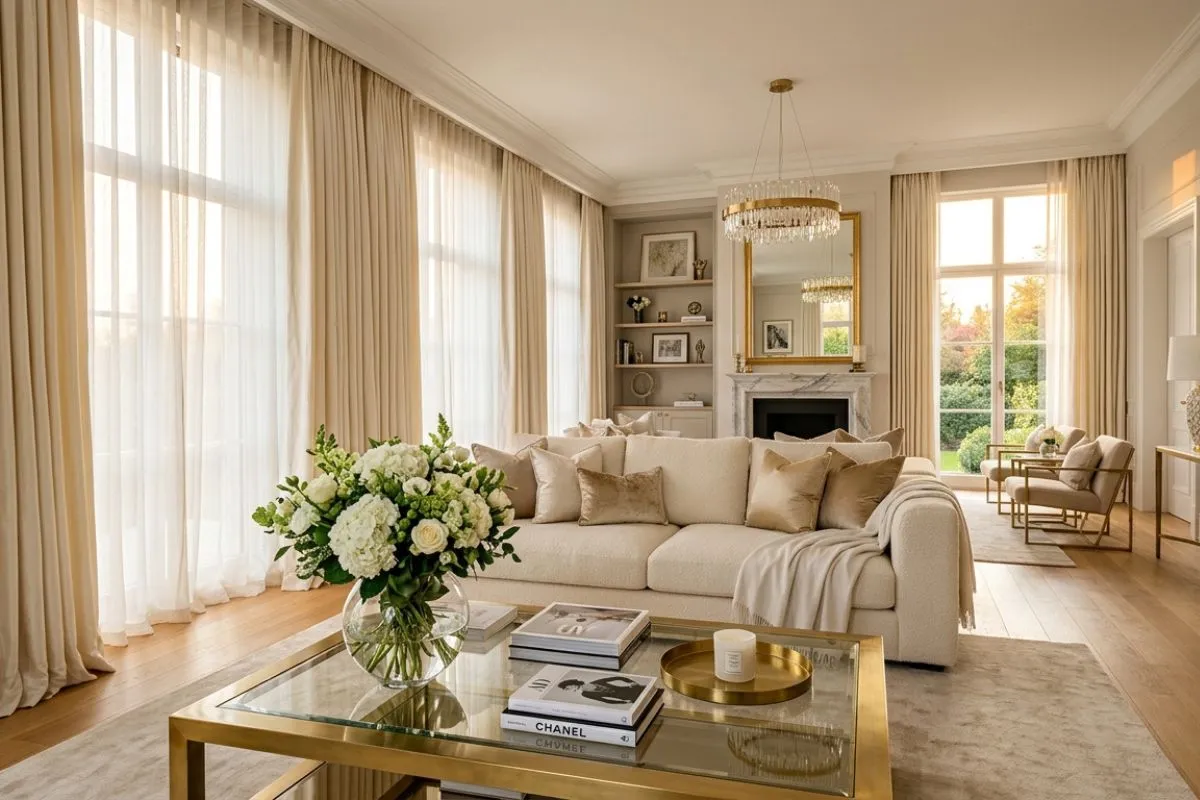
There is a moment every interior designer knows well, the moment curtains go up in a room and everything suddenly makes sense. The furniture that looked merely nice now looks intentional. The light feels warmer. The space feels finished. That’s the quiet, underestimated power of luxury curtains for the living room, and once you experience it, you’ll never treat window treatments as an afterthought again.
Whether you are starting from scratch or finally upgrading those builder-grade panels you have been meaning to replace for three years, this guide walks you through everything , the fabrics that make a room feel expensive, the styles that work in real homes, the mistakes that even well-decorated rooms make, and how to get a genuinely luxurious result without overspending on the wrong things.
Quick Comparison: Luxury Curtain Fabrics
Choosing the right curtain fabric affects not only how your living room looks but also how the curtains hang, filter light, and perform over time. The comparison below summarizes the most popular luxury curtain fabrics to help you decide which option best suits your home and design style.
| Fabric | Luxury Level | Best For | Maintenance | Investment Level |
|---|---|---|---|---|
| Velvet | ★★★★★ | Traditional & Glamorous Interiors | Medium | High |
| Linen | ★★★★☆ | Quiet Luxury & Scandinavian Homes | Easy | Medium–High |
| Silk | ★★★★★ | Classic Luxury Interiors | High | Premium |
| Velvet-Linen Blend | ★★★★☆ | Modern Luxury Homes | Easy | Medium |
| Faux Silk | ★★★☆☆ | Budget Luxury | Easy | Entry-Level |
Each fabric has its own strengths, so let’s explore them in more detail.
Why Curtains Have More Impact Than Most People Realise
Most people spend months agonizing over sofas, rugs and paint colors and then spend twenty minutes choosing curtains. This is almost always a mistake.
Curtains do several things at once that no other element in the room can do. Curtains control how light enters the space. This changes the entire mood at different times of day. Properly hung curtains add vertical line and height, making ceilings feel dramatically taller. They introduce softness and texture in a way that hard furniture simply cannot. And they frame the most important architectural feature most living rooms have the windows.
According to Architectural Digest, window treatments are consistently ranked among the top three design decisions that transform a living room yet they remain the most commonly rushed purchase in home interiors. In a luxury living room specifically, curtains are often what separates a space that looks “decorated” from one that looks genuinely designed. The difference is usually not the sofa brand or the coffee table price, it’s whether the window treatment was chosen with the same intention as everything else in the room.
If you’re building your living room from the ground up, our guide to modern luxury living room trends covers everything from furniture layouts to lighting choices that work beautifully alongside floor-to-ceiling curtains.
The Fabrics That Actually Look Expensive
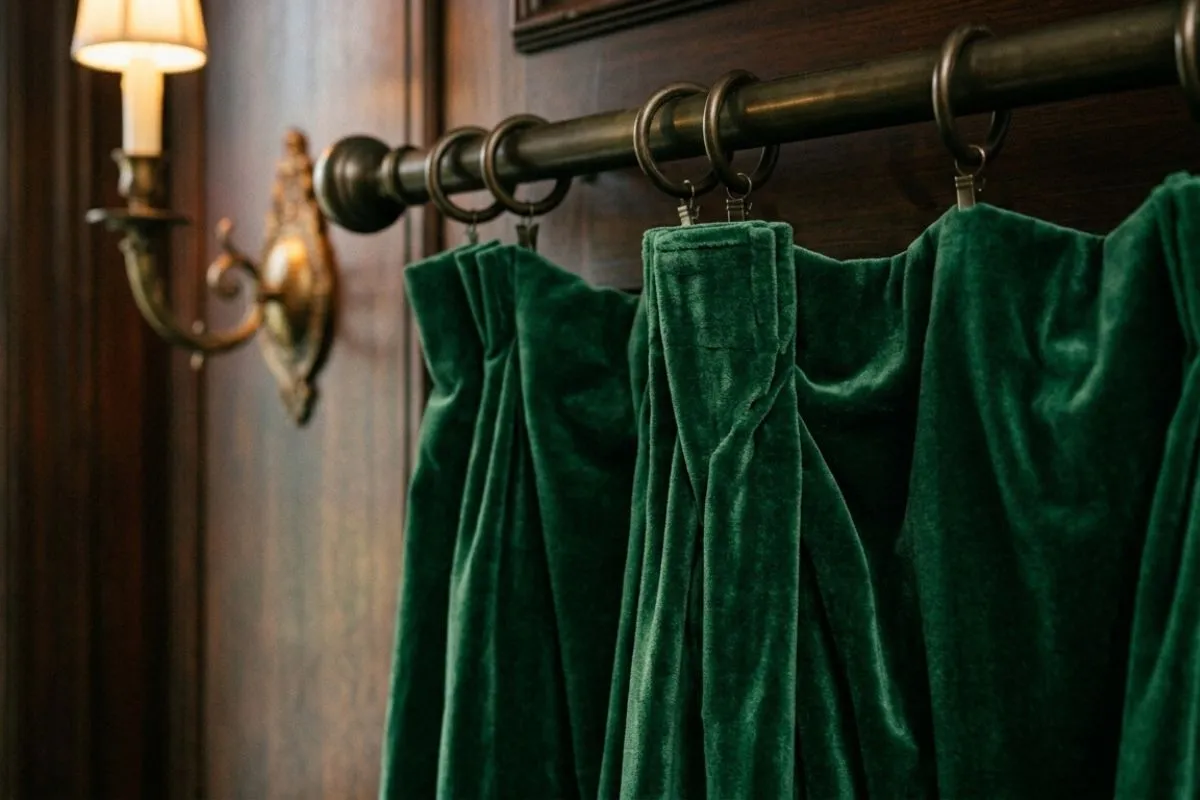
This is where most curtain decisions should start not with color or style, but with fabric. The material determines how a curtain hangs, how it catches light, and whether it reads as premium or flat.
Velvet The Most Impactful Choice
Velvet is arguably the most impactful fabric you can put on a living room window. It has a natural depth and richness that photographs beautifully and looks even better in person. It absorbs sound, making rooms feel quieter and more intimate. Crushed or silk velvet in jewel tones , deep emerald, sapphire, burgundy has become one of the defining looks of current luxury interiors. The one trade-off is weight. Velvet needs strong, properly anchored hardware to hang well.
Linen and Silk Quiet and Traditional Luxury
Linen sits at the opposite end of the spectrum but is equally at home in a luxury space. It’s light, breathable and has a relaxed quality that works exceptionally well in coastal, Scandinavian or quiet luxury interiors. Linen curtains let diffused light filter through beautifully. This gives rooms a warm, golden glow during the day. Always choose quality linen cheap versions wrinkle excessively and lose their shape quickly.
Silk is the most traditionally luxurious choice. Nothing catches and plays with light quite like it. Real silk curtains have a luminous quality that synthetic alternatives simply cannot replicate. They are also the highest-maintenance option. Silk is sensitive to sun damage and requires careful cleaning. Interlined silk curtains help address both issues by adding body and providing UV protection.
Budget-Friendly Alternatives Worth Considering
Velvet-linen blends and faux silks have improved dramatically in recent years. They are worth considering if budget or practicality is a concern. The best versions are difficult to distinguish from the real thing at a conversational distance.
The Interior Design Association notes that fabric weight and lining quality are the two factors most consistently overlooked by homeowners and the two that make the biggest difference to how a curtain performs and ages over time.
Styles That Define a Luxury Living Room

Once you’ve settled on fabric, the style of the curtain, how it’s constructed and how it hangs has a significant impact on the final result.
Floor-to-ceiling curtains are the single most impactful upgrade you can make in a standard living room. Hanging curtains from as close to the ceiling line as possible, not from the top of the window frame instantly adds the sense of height and grandeur that luxury interiors are known for. If your ceilings are 9 feet or higher, this approach is non-negotiable for a properly elevated result.
Puddle curtains where the fabric intentionally pools slightly on the floor were once considered fussy and high-maintenance. In current luxury design, a modest puddle (3 to 6 inches) has made a strong comeback, particularly in formal living rooms and velvet applications. It reads as deliberately opulent rather than accidental.
Pinch pleat and goblet pleat headers give curtains a more formal, structured look. They’re the heading style you’ll see most often in hotel suites, Georgian townhouses and classic luxury interiors. They require more fabric, usually 2.5x the window width but the result is a full, sculpted hang that looks genuinely expensive.
Eyelet curtains have a cleaner, more contemporary look and are easier to slide open and closed. They work well in modern or Scandinavian-influenced spaces but can feel less formal in a traditional luxury context.
This principle of intentional styling extends beyond curtains; it’s the same thinking that defines quiet luxury fashion style and has redefined how we approach elegance across every area of life, from what we wear to how we decorate our homes.
Colours That Do the Work for You
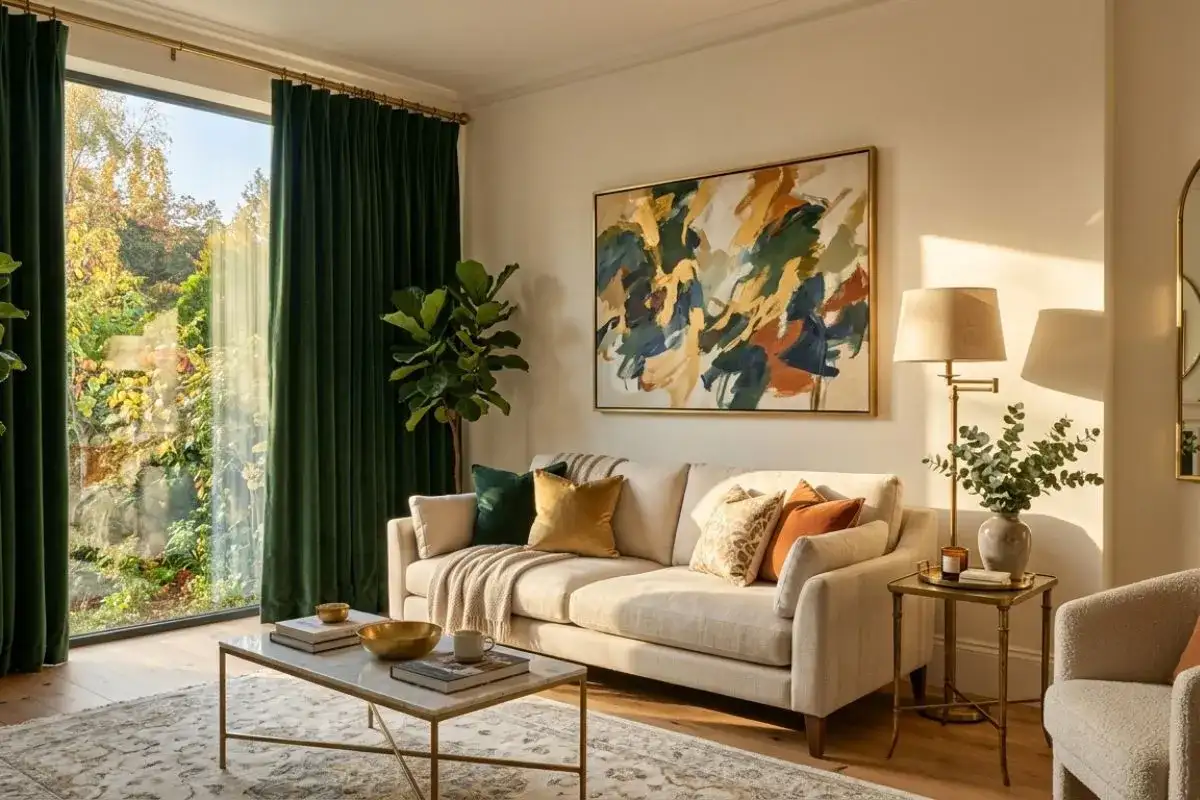
Colour is often where people hesitate most with luxury curtains and understandably so, because it’s a commitment that’s harder to change than a throw pillow.
Neutral tones off-white, warm ivory, greige, stone are the safe choice and also genuinely versatile. In a well-lit room, floor-length ivory linen curtains have a timeless, clean quality that works with almost any interior palette. The risk is that they read as bland rather than intentional if the rest of the room doesn’t carry enough warmth or texture.
Deep, saturated colors forest green, navy, dusty rose, terracotta, midnight blue are having an extended moment in luxury interiors and show no signs of retreating. The key to making bold curtain colours work is treating them as a design anchor rather than an accent. Build the rest of the room’s palette around the curtain rather than trying to match it.
Pattern is the most advanced choice and the one with the highest ceiling for impact. A subtle stripe, a large-scale botanical print or a quiet geometric in velvet or linen can become the defining visual element of an entire room. The rule is simply that if the curtain has a pattern, the furniture and rug should be largely solid and vice versa.
According to Elle Decor, deep jewel-toned curtains, particularly emerald green and sapphire blue have consistently topped their annual interior trend reports as the colour choices most associated with a genuinely high-end living room finish.
How to Hang Curtains the Right Way
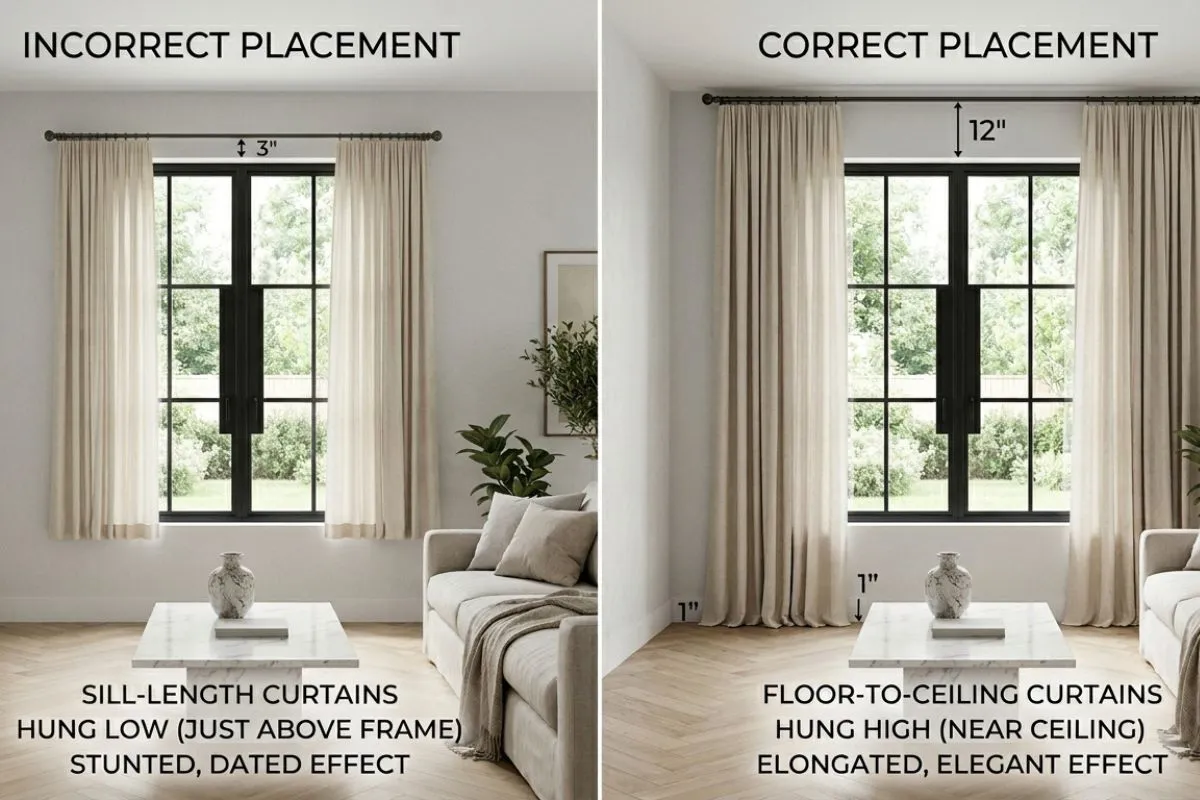
The most common mistake in otherwise well-decorated living rooms is hanging curtains wrong and it’s immediately obvious once you know what to look for.
Hang high, hang wide
Mount the rod 4 to 6 inches above the window frame, ideally at or near the ceiling cornice. Mount the rod 6 to 12 inches beyond the window frame on each side so the curtain stacks off the glass when open, maximizing the amount of window showing and making the wall feel wider.
Use the right hardware
In a luxury context, curtain rods and rings should be treated like jewellery for the room: brass, matte black, aged bronze, or satin nickel depending on your hardware palette. Spindly chrome rods undermine even the best curtain fabric.
Get the length right
The curtain should either just kiss the floor (0.5 inch clearance), break slightly (1 to 2 inches of fabric resting on the floor), or puddle intentionally. What it should never do is hang awkwardly short of the floor; the ankle-length curtain is the most reliably unflattering option in any room.
House Beautiful recommends always ordering curtains at least 12 inches longer than your measured drop as a starting point. It’s far easier to hem a curtain that’s too long than to source a replacement panel that’s too short.
Brands Worth Knowing for Luxury Curtains

If you’re looking for ready-made options at a luxury level, a few names consistently deliver:
Restoration Hardware (RH): offers some of the best ready-made linen and velvet panels available at a premium but accessible price point. Their Belgian linen panels in particular have developed a strong reputation in interior design circles.
Pottery Barn’s higher-end lines: offer good quality at a mid-luxury level and are widely available, which makes returns and exchanges easier.
Etsy and independent textile studios: are genuinely underrated for made-to-order luxury curtains particularly for unusual colours, custom lengths, or specific fabric blends. Many skilled workrooms operate through these platforms at prices well below what you’d pay at a boutique interior design studio.
For the highest-end result, working with a local interior designer or soft furnishings specialist who sources fabric directly from mills Designers Guild, Romo, or Jim Thompson and has panels made by a local workroom will almost always produce a superior result to anything off-the-shelf. These fabric houses supply the interiors industry’s most respected names and their collections represent the genuine top tier of what’s available.
Styling Curtains Into Your Existing Room
Even the most beautiful curtains can look disconnected if they’re not properly integrated into the rest of the room. A few things make a real difference:
Tiebacks and holdbacks
Add a formal, finished quality to floor-length curtains and are one of the most affordable ways to elevate the look. Rope tiebacks work beautifully with velvet; simple brass holdbacks suit linen and silk.
Layering with sheers
Hanging a sheer or voile panel behind a heavier drape gives you control over privacy and light throughout the day while adding visual depth that single-layer curtains can’t achieve. It’s also one of the techniques most associated with genuinely high-end interior schemes.
Carrying fabric elsewhere in the room
A cushion in the same velvet, or a throw in a complementary shade ties curtains into the space rather than leaving them as isolated elements.
This kind of considered layering is exactly what distinguishes a truly luxurious home from one that simply has expensive individual pieces. For more on how the world’s most prestigious names approach this kind of holistic thinking, our guide to top luxury brands in the world explores the design philosophy behind labels that have defined luxury for generations.
Modern Luxury Curtains for Living Room: Clean Lines and Contemporary Elegance

Not every luxury living room calls for velvet drapes and goblet pleats. If your space leans contemporary, think clean architecture, minimal furniture, a palette built on texture rather than pattern; then modern luxury curtains for the living room are a different conversation entirely. They are worth getting right on their own terms.
Fabric and Tone in Modern Luxury Window Treatments
Modern luxury in window treatments is defined by restraint. Fabrics tend toward heavyweight linen, brushed cotton, or refined wool blends in quiet, sophisticated tones, warm white, soft charcoal, dusty taupe, sage. Nothing too bright, nothing too busy. The goal is a curtain that reads as deliberate and calm rather than decorative.
Hardware and Heading Styles That Define the Look
Hardware choices shift in a modern context. Traditional luxury favours ornate rods and detailed finials. Modern luxury tends toward matte black or brushed brass in clean cylindrical profiles simple, architectural, precise. Ceiling-mounted tracks are increasingly popular because they allow curtains to sit flush against the wall with no visible hardware interrupting the line. Heading styles almost always favour ripple fold or wave fold continuous soft folds that hang in even, rhythmic curves. The effect is elegant without looking stiff or formal.
How Colour Works in a Modern Luxury Living Room
Modern luxury curtains tend to do one of two things with colour. Either they disappear into the wall chosen in a tone that closely matches the paint or they make a single confident statement in a muted but impactful shade. A wall of soft olive linen panels in a white room with pale oak floors is a quietly powerful design move that reads as genuinely sophisticated without trying hard.
Why Execution Matters More Than Ever
The key distinction between modern luxury and simply “modern” is quality of execution. In a minimal scheme every detail is visible. Fabric weight, hem finish, lining quality and hang precision matter more, not less. A cheap curtain in a busy room can hide behind other elements. In a modern luxury living room it has nowhere to hide.
According to Homes & Gardens, ceiling-mounted curtain tracks paired with ripple fold panels are now the number one specification choice among professional interior designers working on high-end contemporary residential projects a shift that has happened almost entirely within the last three years.
Final Thoughts
Luxury curtains for the living room aren’t a decorating indulgence, they’re one of the most cost-effective ways to change how a room feels. The right fabric, hung correctly, in the right length, can make a standard living room look like it belongs in an interior design magazine. The wrong curtains or no real thought given to curtains at all can quietly undermine an otherwise beautifully furnished space.
Start with fabric. Get the hang height right. Treat the hardware as part of the design. And whether your style runs traditional and opulent or clean and contemporary, the same principle applies: choose with intention and the room will reward you for it.
If you’re working on the full room alongside your curtains, explore our guide to modern luxury living room trends because curtains this good deserve a room that’s ready for them.
Frequently Asked Questions
Q1. What type of curtains are considered most luxurious for a living room?
Ans: Velvet, silk and high-quality linen are the most luxurious curtain fabrics. Velvet is the most dramatic; its depth and texture instantly elevates any space. Silk has an unmatched luminous quality no synthetic can replicate. Linen is the quieter luxury option, perfect for contemporary interiors. Floor-to-ceiling length with a pinch pleat header is what truly separates a luxurious result from an ordinary one.
Q2. How long should luxury curtains be for a living room?
Ans: Luxury curtains should always be floor length. You have three options; a clean break (half an inch from the floor), a slight break (1 to 2 inches resting on the floor) or a deliberate puddle (3 to 6 inches pooling dramatically). Never hang curtains several inches above the floor. This single mistake makes even expensive curtains look cheap and unfinished.
3. What is the difference between expensive and cheap curtains?
Ans: The difference comes down to fabric, lining and construction. Expensive curtains use quality natural fabrics with proper lining that adds body, improves drape and protects against sun damage. They hold their shape for years. Cheap curtains use thin synthetic fabrics that look flat and lose their shape within months.
4. How do I make my living room curtains look more luxurious without replacing them?
Ans: Five quick upgrades make the biggest difference. Re-hang them higher as close to the ceiling as possible. Let them touch or puddle on the floor. Upgrade the hardware to brass or matte black. Add a sheer panel behind for a layered look. Add tiebacks or holdbacks for a finished, intentional quality.