
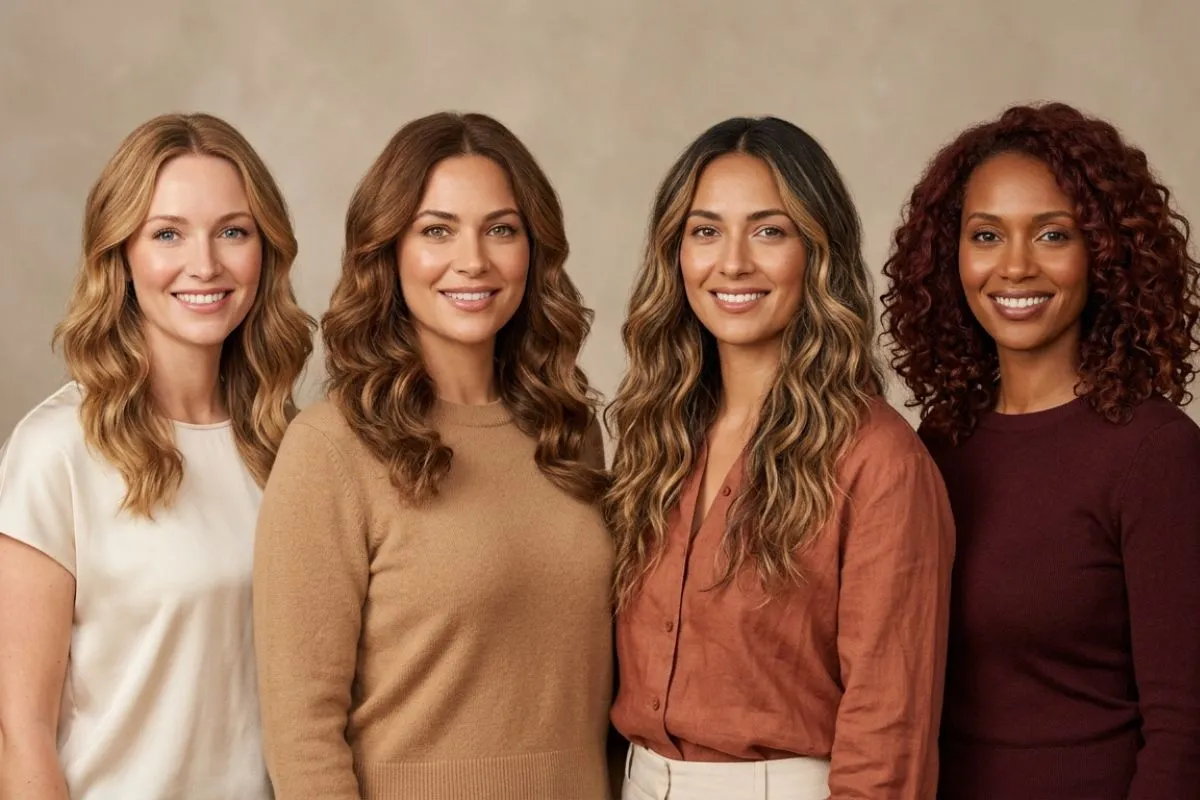
You have probably noticed it without realising why. One hair colour has friends asking if you changed your skincare routine, while another somehow leaves you looking more tired, even after a full night’s sleep. I used to think a flattering hair colour was mostly about following trends, until I noticed the same shade could make one person glow and another look completely washed out.
Most guides stop at a single list of shades and call it done. This one goes a layer deeper. The right warm-toned hair colour changes depending on how fair, olive, or deep your complexion is, and matching that depth is what separates a shade that flatters from one that just sits there. Choosing the right style also depends on your overall look, including your haircut and face shape. Explore our guide on Types of Bangs for hairstyle inspiration that pairs well with different hair colours.
What Hair Colour Suits Warm Skin Tones?
Honey blonde, caramel, warm chestnut, copper, auburn, these all share the golden, peachy, amber base that warm skin already has, so they don’t fight it; they echo it. Ash, platinum, and any cool-toned brunette pull in the opposite direction. Wear one of those, and warm skin tends to look sallow instead of glowing.
How to Know You Have a Warm Undertone

Tone and undertone aren’t the same thing, even though people use them interchangeably. Tone is what you see on the surface, from fair to deep, and it shifts with a tan. Undertone sits underneath and never moves.
Check your wrist in daylight. Greenish veins? You’re probably warm. Blue or purple, you’re leaning cool.Dermatologists explain that cool undertones tend to show more visible blue or purple veins, while warm undertones lean toward a greenish cast, though honestly, this test alone has never been enough for me to trust it completely. Stylists caution that it’s not definitive on its own; lighting, skin thickness, even the room temperature can throw it off.
So back it up.
Hold gold jewellery against your skin, then silver; warm undertones usually pull richer with gold. And think about the sun: do you tan, or do you burn first and never tan? Warm skin tans. Get two of these three to agree, and you’ve got your answer.Understanding whether your undertone is warm, cool, or neutral can also help when choosing clothing colours and building a personal style. Our guide to Quiet Luxury Fashion Style explains how colour choices influence an elegant wardrobe.
Best Hair Shades for Warm Skin Tones by Depth
Warmth doesn’t look the same at every depth. A shade that makes fair warm skin glow can turn chalky and flat on deep warm skin. Matching hair shades for warm skin tones to your actual depth, not just your undertone, is where the real payoff is.
Fair Warm Skin
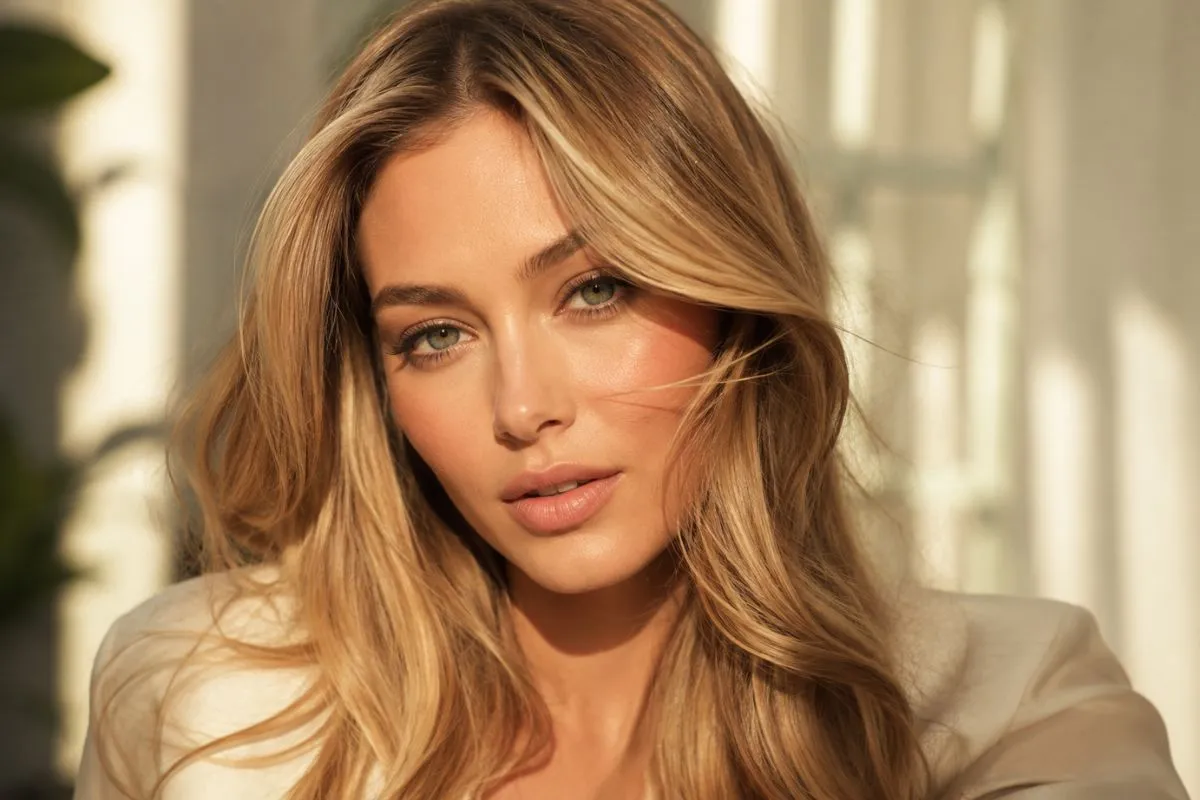
Peachy, lightly golden, burns before it tans. Heavy or dark colours tend to overpower this depth, so stay light, stay golden.
Honey blonde is the safe entry point: gold and amber, no brassy edge. Strawberry blonde works beautifully too, especially with a peachy cast, since its soft red-gold base mirrors what’s already there. Want to dip a toe in rather than commit?
Light chestnut with a few caramel highlights adds dimension without darkening the whole head.
Medium and Olive Warm Skin

This is where the widest range of flattering options lives, and honestly, medium and olive warm skin tones can handle more saturation than people give them credit for. Golden brown, honey brown, warm balayage, all of it reads as natural here, never costume-like.
Chestnut brown, with its reddish undertone, might be the most dependable pick in the whole list. It photographs well both in daylight and indoors, which matters more than people expect; there’s nothing worse than a colour that looks perfect at the salon mirror and flat by evening light.
Want more visible warmth without going fully red? Copper brown does that. And caramel balayage adds movement to hair that would otherwise sit as one flat block of colour.
Deep Warm Skin
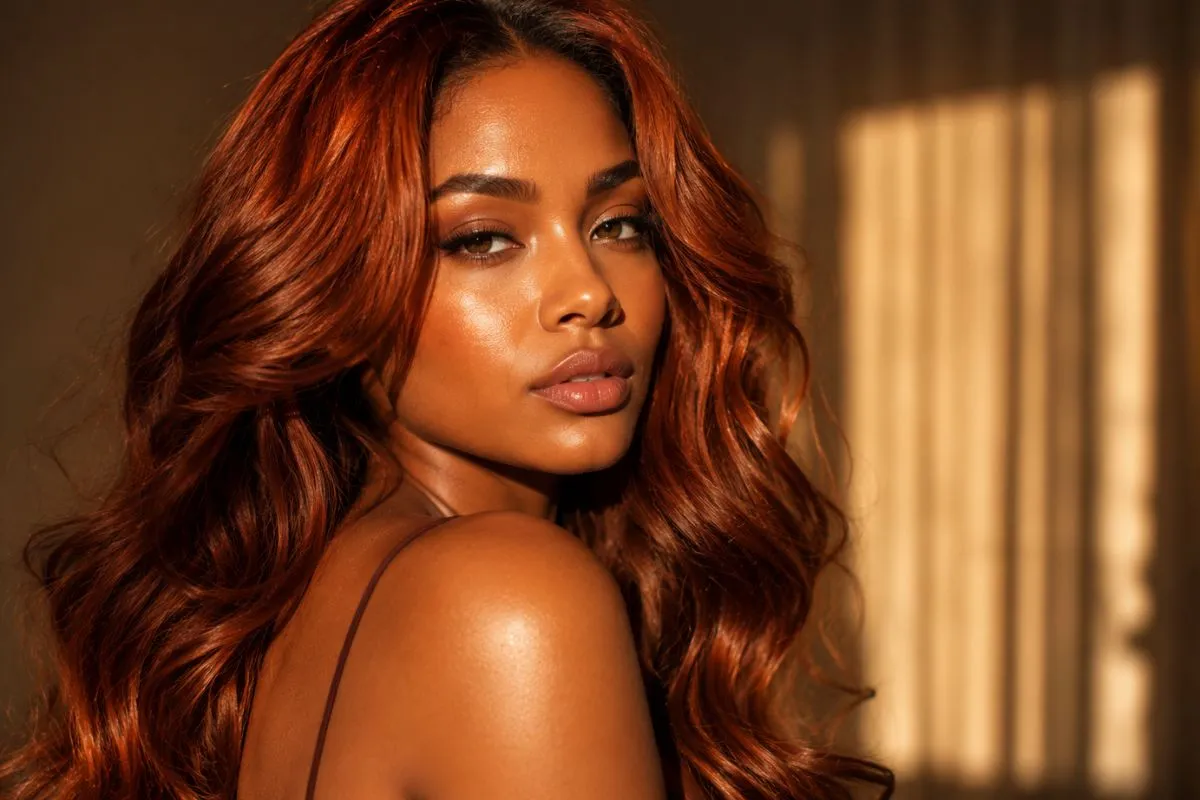
Rich, golden or bronze at the base, it can carry the boldest warm shades without ever looking washed out. Rich auburn. Deep copper. True black.
True black gets lumped in with cool shades by default, and that’s a mistake worth correcting. On deep warm skin, it reads rich, not harsh, especially next to a blue-black, which fights the skin’s warmth instead of working with it.
Auburn with a deep copper base brings a glow that lands as sophisticated rather than flashy. Moving away from solid black? Mahogany, with its reddish-brown depth, is a natural next step.
Best Hair Shades for Warm Skin Tones: Comparison Chart
Fair warm skin usually suits lighter golden shades, medium and olive warm skin works well with caramel and chestnut tones, while deep warm skin can carry rich auburn, copper, and true black shades.
| Hair Shade | Best Skin Tone Depth | Best For | Maintenance | Why It Works |
|---|---|---|---|---|
| Honey Blonde | Fair to Medium | Natural golden look | Moderate | Golden tones enhance warm undertones |
| Chestnut Brown | Medium to Olive | Everyday elegant colour | Low | Red-brown warmth complements olive skin |
| Copper | Fair to Deep | Bold warm transformation | High | Orange-red pigments amplify warmth |
| Caramel Balayage | Medium to Olive | Dimension without full colour | Low | Soft highlights create movement |
| Auburn | Medium to Deep | Rich sophisticated look | Moderate | Red-brown tones suit warm complexions |
| True Black | Deep | Dramatic contrast | Low | Looks rich instead of harsh |
Hair Colours to Avoid With Warm Undertones
Ash blonde, platinum, anything marketed as “cool” or “ash” brunette, these fight a warm undertone more often than not. Blue-black does the same at the darker end. None of its forbidden, exactly; a good colourist can adjust almost any formula. But it takes more correction to land right on warm skin than a shade already sitting in the warm family to begin with. Lean cool instead? The shade guidance flips.
Keeping Warm Hair Colour From Fading or Turning Ashy

Here’s a maintenance trap almost nobody warns you about: purple shampoo, the thing everyone reaches for automatically, is built to cancel warmth. Use it on hair that’s already warm-toned, and it strips out the exact gold, copper, or red that made the colour work in the first place. Duller, cooler, not what you asked for.
Save the purple or blue-toning stuff for the rare stretch when highlights go genuinely brassy-orange. Not a weekly ritual. Daily care calls for a colour-safe shampoo with no toning pigment in it that protects the warmth instead of quietly stripping it. A warm-toned gloss between full-colour appointments helps too; it’s cheaper and faster than a full reformulation, and it keeps the shade from drifting cool as it grows out.
Booking the appointment is its own skill. Say “warm chestnut,” say “caramel brown with golden highlights”, don’t just say “brown.”
Colourists mix from a base, and the word “warm” steers that base away from the ash-heavy formulas most standard colour charts default to.
Frequently Asked Questions
Q1: Can warm skin tones wear black hair?
Yes. On deep warm skin, true black reads warm, not cool; the richness complements a golden or bronze base. Blue-black is the one to skip; its cool cast fights warm undertones directly.
Q2: Is red hair good for warm skin tones?
Auburn and copper, both warm-based reds, tend to work well. Watch out for a blue-based, cool red, though. That one introduces the same clash as ash blonde or platinum.
Q3: Do warm undertones look better in blonde or brunette?
Neither wins outright. Temperature is what matters, not depth of colour. A warm honey blonde and a warm chestnut brunette both work; an ash blonde and a cool ash brunette both tend to clash. Still not sure where you land? A seasonal colour analysis narrows it down further.
Q4: How often do warm hair colours need a touch-up?
Depends entirely on the shade. Chestnut brown and caramel balayage grow out with barely a visible line, often stretching 8-10 weeks between visits. Copper’s the opposite story; it fades fastest and usually needs a refresh every 4-6 weeks to stay rich instead of washed out.
Q5: Can I test a warm hair colour before committing?
Try a semi-permanent gloss or clip-in extensions in the shade you’re considering, as the lowest-risk way to see it against your actual skin before anything permanent happens. Most colourists will also run a strand test at the consultation, and that shows the real tone your hair takes, not the version printed in a swatch book.